Local AI Audio Engineering: 5-Stem Drum Source Separation Without Cloud Data Leakage or Subscriptions
How local deep-learning inference eliminates NDA compliance risks and subscription fees, enabling high-resolution 5-stem drum extraction (Kick, Snare, Toms, Cymbals, Others) directly on your local workstation.
Among modern machine learning developments in music technology, Audio Source Separation offers some of the most profound creative utility.
Separating individual instrument tracks from a fully mixed stereo master was once considered mathematically impossible. Today, deep convolutional U-Net and attention-based Transformer models operating on complex spectrograms can isolate acoustic components with remarkable fidelity.
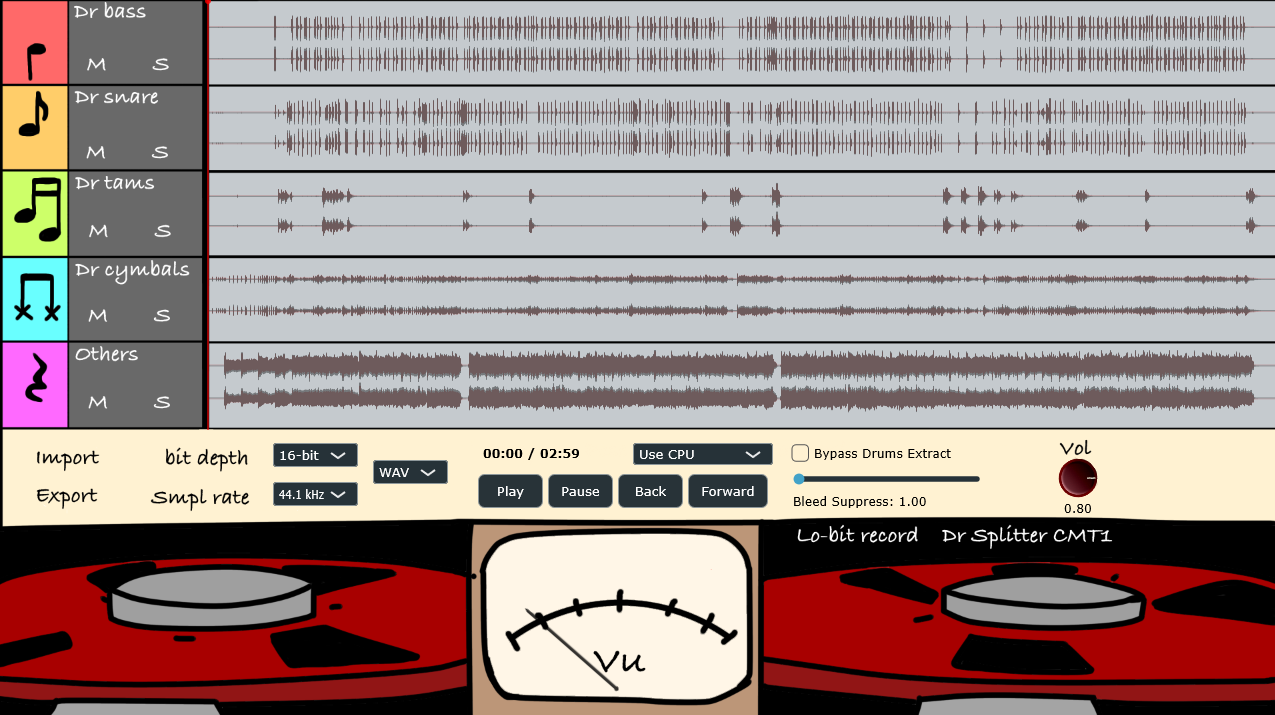
However, standard cloud-based commercial separation services introduce severe operational drawbacks in professional studio environments. This article explores the engineering rationale behind fully local execution (the design behind Dr splitter CMT1) and practical studio workflows.
1. The Critical Flaws of Cloud-Based Separation Services
Browser-based commercial stem splitters impose three fundamental friction points:
- Confidentiality and NDA Violations: Uploading unreleased artist stems or commercial film cues to third-party offshore cloud servers risks severe breach of non-disclosure agreements.
- Per-Minute Token Costs and Subscriptions: Metered credits restrict freeform sample experimentation for beatmakers and remixers.
- Lossy Bandwidth Overhead: Uploading multi-gigabyte 24-bit/96kHz session files across remote servers throttles real-time workflow.
2. The Local Inference Pipeline
Dr splitter CMT1 completely severs external network communication, executing neural inference natively on the user’s local Windows 64-bit hardware:
[Local Master WAV File]
        │ (100% Offline / Zero Cloud Communication)
        ▼
[STFT Time-Frequency Analysis]
        ▼
[Deep Convolutional U-Net Separation Model]
        │
        ├──> Stem 1: Dr bass (Kick Drum)
        ├──> Stem 2: Dr snare (Snare Drum)
        ├──> Stem 3: Dr tams (Toms)
        ├──> Stem 4: Dr cymbals (Hi-Hats & Overheads)
        └──> Stem 5: Others (Percussion & Bleed Ambience)
        ▼
[Inverse STFT Synthesis] ──> [Instant Discrete WAV Export]
Why a Dedicated 5-Stem Drum Split?
Standard models yield 4 coarse stems: “Vocals / Drums / Bass / Other.” However, the drum track remains an inseparable composite of kick, snare, cymbals, and room bleed.
By breaking the drum kit down into five discrete acoustic stems, producers unlock surgical mixing workflows previously unattainable.
3. Practical Studio Applications
- Uncompromised Vinyl Sample Extraction: Isolate foundational funk breakbeats into pure kick thumps or ghost-snare rolls with zero hi-hat cymbal wash.
- Drum Mic Bleed Elimination & Trigger Replacement: Clean live snare tracks of heavy hi-hat spill, allowing pinpoint gating, compression, and accurate velocity-sensitive MIDI triggering.
- Independent Transient Processing: Shape kick punch with sub-harmonic synthesis while running the snare through vacuum tube saturation without distorting the cymbals.
- Instant Drum-Minus-One Playalong Tracks: Export clean backing tracks for drummers and practice routines in seconds.
*Tracks created using the environments, gear, and techniques featured on this site are available for preview and free download in the Lo-bit LAB Free BGM Library. Continuously updated.*
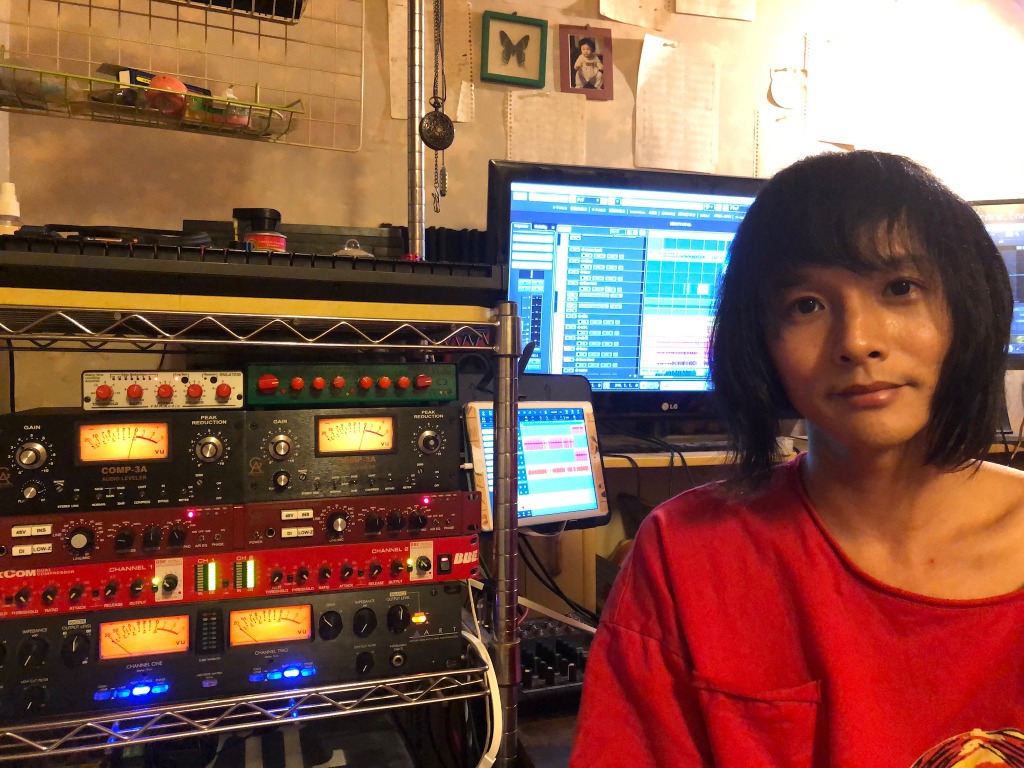
Lin Wolinski / Lo-bit record
Musician, Recording & Mixing Engineer, Music Instructor (Guitar, Bass, DTM, Composition & Arrangement), and C++ Audio DSP Plugin Developer.
Active as Bassist, Synthesist, Backing Vocalist, and Composer/Arranger for the rock band "Once Grace Forever".
Following musical study in Australia, actively engaged in professional music production, bespoke mixing & mastering, boutique audio plugin development under "Lo-bit record", releasing royalty-free music assets, and authoring audio engineering resources.