
Building a DIY Soundproof Guitar Amp Cabinet for Home Recording at Realistic Volumes
To everyone who wants to record real guitar amp sound at home. Introducing a practical DIY soundproof isolation cabinet using repurposed furniture, complete with A/B audio clips (open vs closed / next room) and raw dynamic mic takes.
💡 Quick Summary (TL;DR)
Want genuine tube amp tones without neighbor complaints?
Soundproofing an entire room costs thousands, but an isolation cabinet (iso-box) built from dense repurposed wooden furniture or thick MDF lets you drive real tube speakers to healthy operational levels in standard residential apartments. Here is a practical walkthrough with internal damping, sealed cable ports, and real audio A/B tests.
To everyone who wants to record the live sound of a real guitar amplifier at home:
Here is a practical look at one way to drive an amp in rental apartments or wooden residential homes—a DIY soundproof amp isolation cabinet.
When people hear “soundproofing,” they usually imagine remodeling an entire room or installing a commercial vocal booth. But all you really need is to surround a 30–60 cm guitar amplifier with dense walls, place a microphone inside, and monitor the signal. It doesn’t need to be in the same physical acoustic space as the human playing the guitar.
Soundproofing becomes exponentially harder and more expensive the larger the area is. If it’s just the size of a piece of home furniture, the barrier to entry drops significantly. In recording, you don’t necessarily have to play at ear-splitting stage volume—you only need enough volume for the mic to capture a healthy, natural tone that is easy to mix in your DAW.
I looked for commercial boxes made to enclose small-to-medium amps, but couldn’t find much at the time, so I decided to build one myself.
What You Need
- Plywood / MDF boards × 6 (the heavier and thicker, the better)
- Power screwdriver / drill (handy if drill bits are swappable)
- Power saw / jigsaw (if you need to cut boards)
- Glue and putty / caulk (to seal air gaps between boards)
- Acoustic foam (in moderation)
I originally planned to build it from raw lumber, but found an unused wooden storage cabinet at home that had just the right size and weight. I drilled out the internal shelves (destroying them in the process) and drilled three holes for cables.
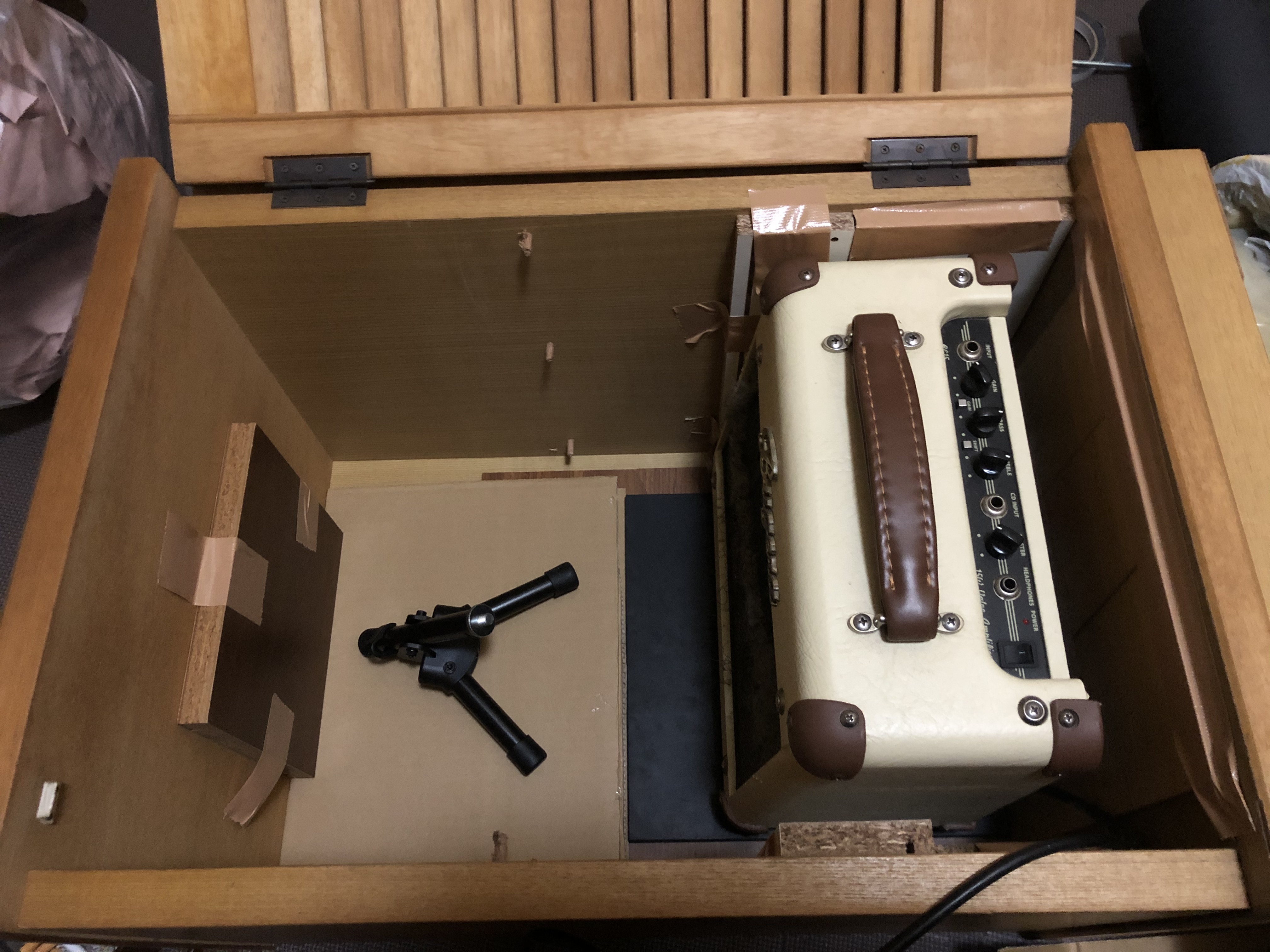
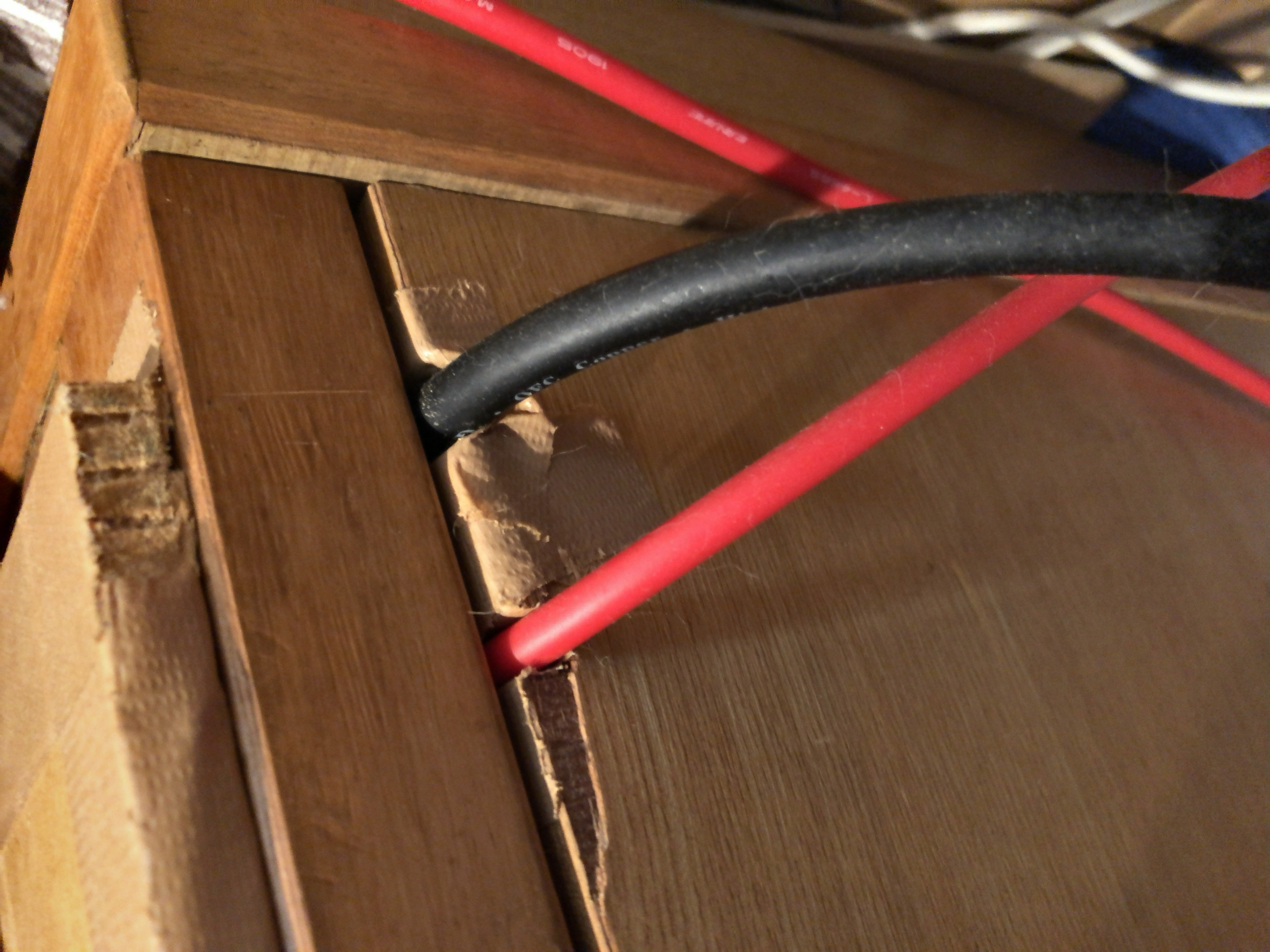
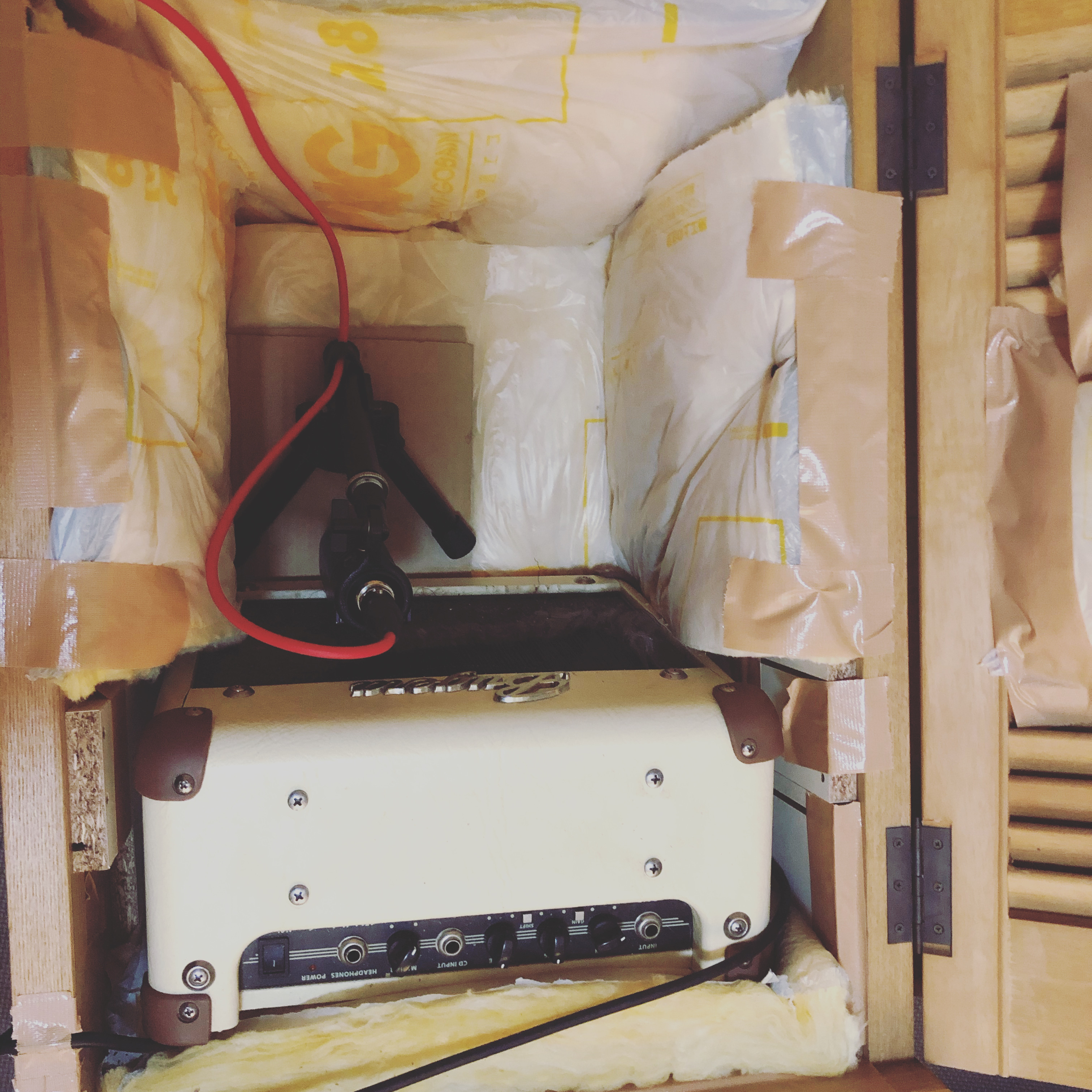
The storage cabinet is roughly 70 × 50 × 40 cm, leaving plenty of room for a Bugera BC15 tube combo and a microphone. Because the BC15 is a combo amp, I drilled three holes total: one for the power cord and two for mic cables.
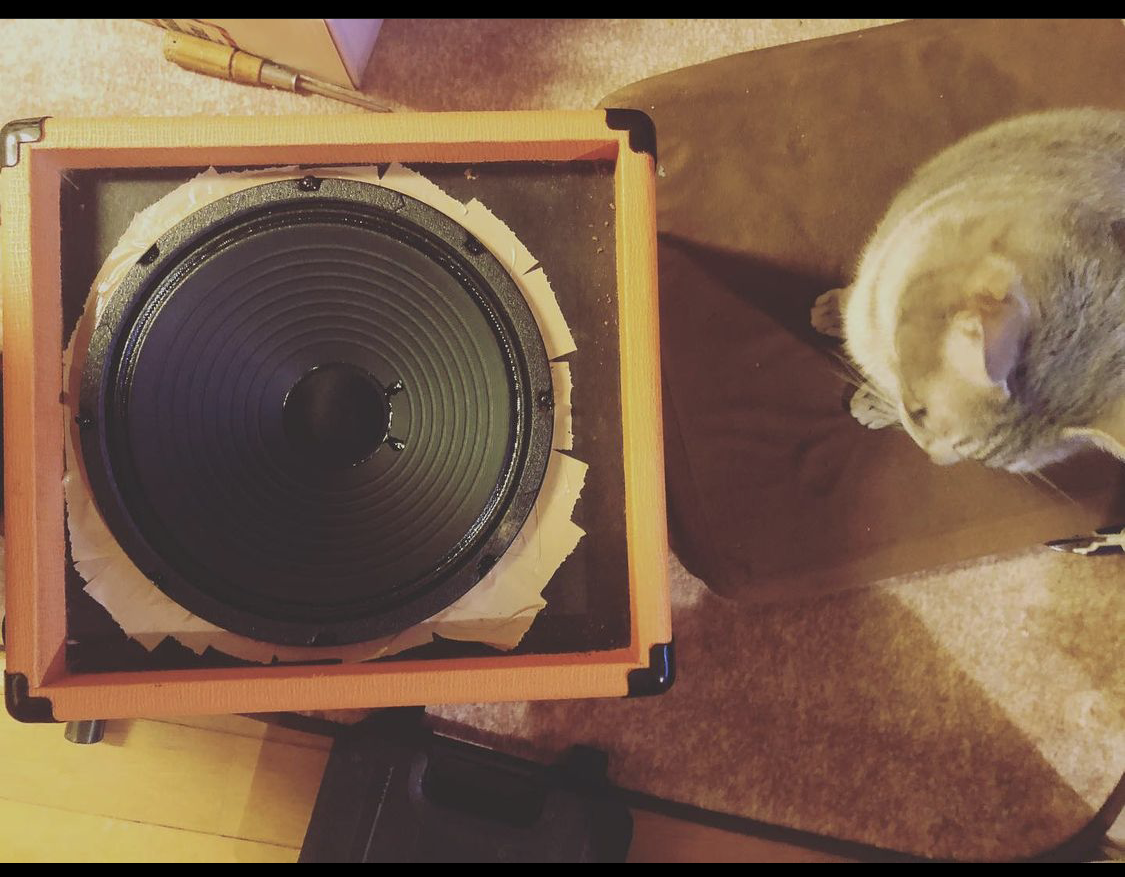
Later, the dimensions looked like a fit, so I bought a junked Orange bass combo, removed the speaker and amplifier chassis to reuse the shell, and squeezed in a 10-inch Eminence RF10 speaker. It barely fit, but it went in.
As for actual soundproofing performance, here is an A/B test recorded directly in front of the cabinet:
Gear Used
- Amp: Vox Night Train 50W (Volume at 12 o’clock)
- Speaker: Eminence RF10 (50W)
- Guitar: Telecaster (Neck: EMG 81 / Bridge: EMG TC red / Center position)
- Pedal: ELECTRO-HARMONIX Metal Muff mini
First half open, second half closed.
If you’re in the same room with the cabinet, you can still hear it when closed, but you can feel the isolation working immediately.
Gear Reference Photos
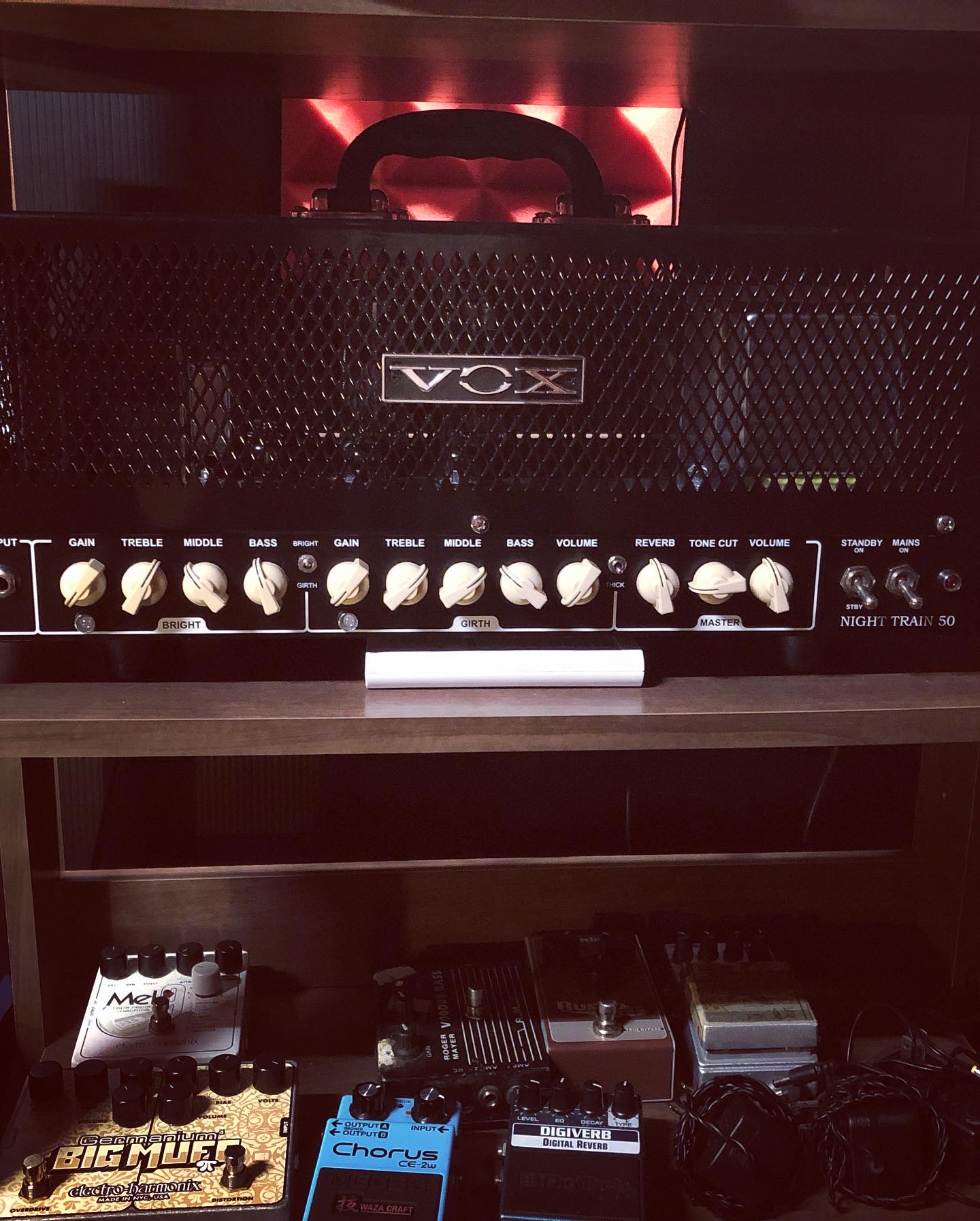
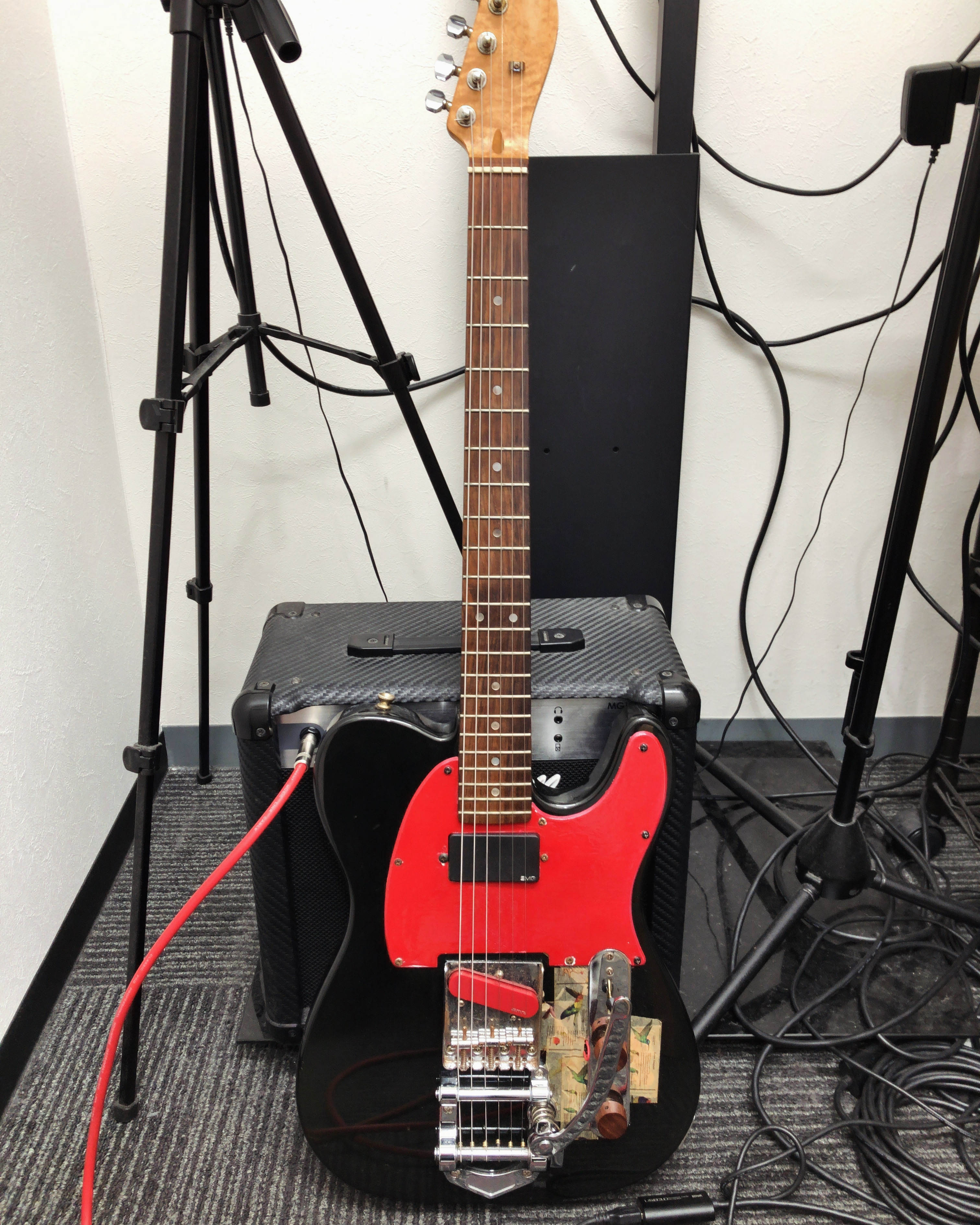
Sound bleed from the adjacent room:
And here is the actual recorded track from the microphone inside:
Same gear setup, recorded exclusively with a single dynamic mic (MXL DX-2).
In my case, I reused an existing piece of furniture. But if you measure your amp, buy matching plywood at a home improvement store (many stores will cut them to your requested dimensions if you ask), and put it together, in theory anyone can soundproof an amplifier for real mic recording.
The main drawback is that it turns out quite bulky because it has to house both the amplifier and the mic. You might struggle with floor space, and if you ever move and need to dispose of it, most municipalities won’t take it as regular trash, so check your local wood disposal rules and recycling centers in advance. It also gets fairly heavy, so placing cardboard or cushioning underneath helps protect the floor and reduces low-frequency floor vibration slightly.
If building a box from scratch sounds like too much trouble, depending on your room layout, sealing up a closet or wardrobe with as few air gaps as possible might also work as a usable guitar amp recording space.
In this day and age, I don’t know how many guitarists, composers, or producers still care about the romantic idea of putting a real microphone in front of an amplifier. But the moment I built this soundproof cabinet and could finally record live amp sound, I felt like I was finally standing at the real starting line.
Every great guitar tone I fell in love with was captured by a microphone. Even if it felt like an uphill battle, I needed to stand on that starting line and aim for what they created.
I hope this article helps anyone chasing that same romance.
*Tracks created using the environments, gear, and techniques featured on this site are available for preview and free download in the Lo-bit LAB Free BGM Library. Continuously updated.*
Lin Wolinski / Lo-bit record
Musician, Recording & Mixing Engineer, Music Instructor (Guitar, Bass, DTM, Composition & Arrangement), and C++ Audio DSP Plugin Developer.
Active as Bassist, Synthesist, Backing Vocalist, and Composer/Arranger for the rock band "Once Grace Forever".
Following musical study in Australia, actively engaged in professional music production, bespoke mixing & mastering, boutique audio plugin development under "Lo-bit record", releasing royalty-free music assets, and authoring audio engineering resources.